
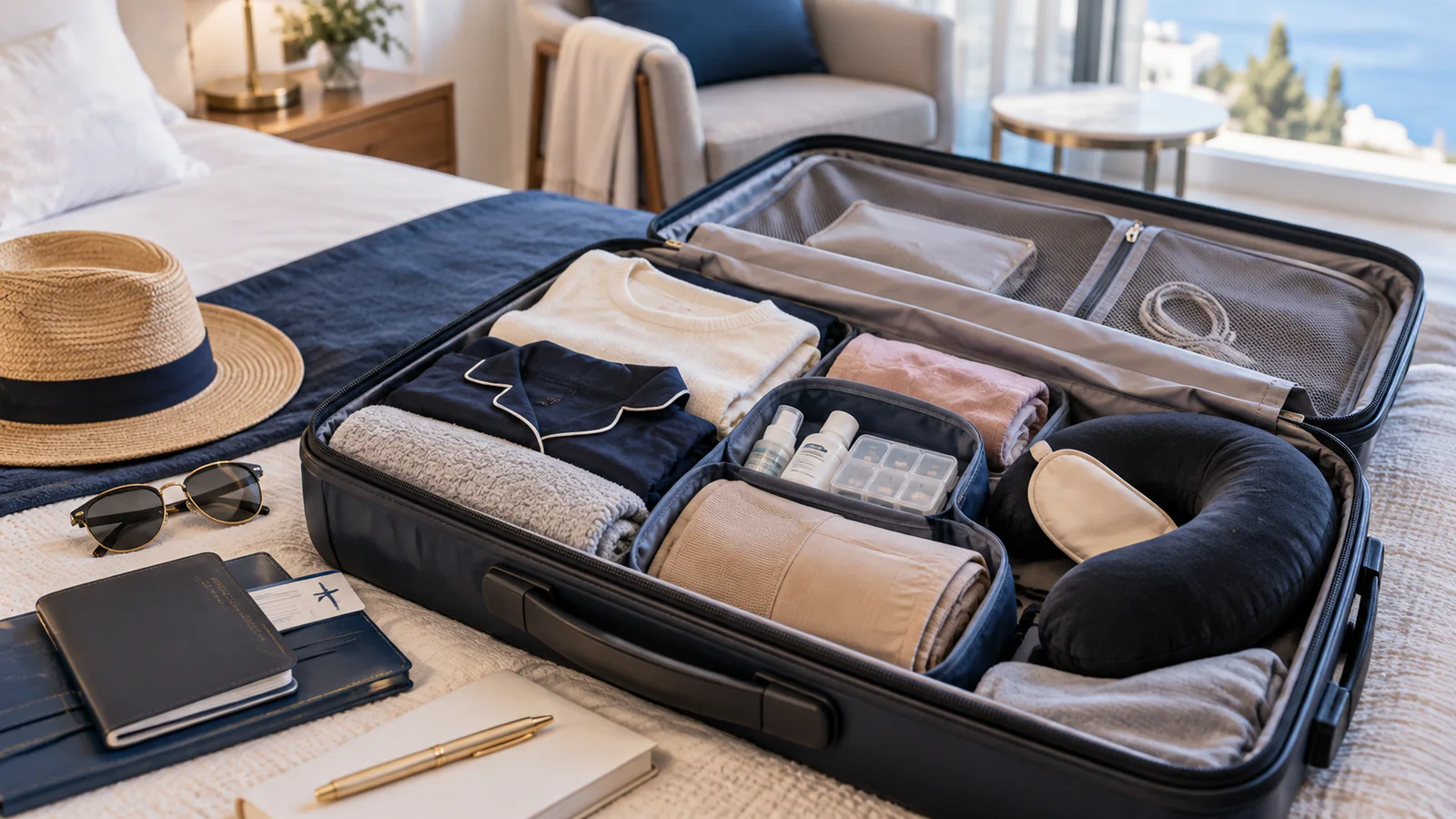
Packing for a surgery trip is different from packing for a normal holiday. The goal is not to bring more things; it is to make the first days after surgery easier, keep essential documents and medicines accessible, and avoid depending on checked luggage for items you cannot easily replace.
The most useful packing list starts with your procedure, your medical history, the length of stay and the instructions given by your surgical team. A generic checklist can help you organize, but it should not override individualized medical advice.
Start with documents, not clothes
Put the documents you may need during travel and treatment in one easy-to-reach folder, both on paper where useful and in a secure digital copy.
Depending on your situation, that may include:
- passport and travel documents;
- clinic and surgeon contact details;
- accommodation address;
- appointment confirmation;
- relevant medical history;
- recent test results requested by the clinic;
- list of allergies;
- current medicines with generic names and doses;
- prescriptions;
- travel or medical insurance details;
- emergency contact information.
For a fuller document-by-document checklist, use Curaatlas’s guide to travel documents for a medical trip to Tunisia.
Do not rely on one phone containing the only copy of everything. Keep essential contact details available offline.
Keep essential medicines in your carry-on
CDC travel guidance recommends carrying medicines in their original, labeled containers and keeping them in carry-on luggage rather than checked baggage. Bring enough for the planned trip, plus an appropriate extra supply in case travel is delayed.
Before you leave, check:
- whether any of your medicines are restricted in Tunisia or in a transit country;
- whether a doctor’s letter is advisable for controlled or injectable medicines;
- whether any medicine needs refrigeration or special storage;
- whether the generic name differs from the brand name you normally use.
Do not move prescription medicines into unlabelled containers just to save space.
Bring copies of your prescriptions and a written medication list. If your surgeon changes any medicine around the time of surgery, make sure you understand exactly what to stop, continue or restart.
Build a small “first 24 hours” bag
Assume that immediately after the procedure you will not want to unpack a large suitcase.
Keep a small bag with the essentials you may need quickly:
- phone and charger;
- power bank;
- identification;
- clinic contact details;
- prescribed medicines;
- water bottle if permitted;
- glasses or contact-lens case if relevant;
- lip balm or simple toiletries;
- a loose layer of clothing;
- any item specifically requested by your care team.
Do not add wound dressings, antiseptics, pain medicines or compression garments simply because they appear on someone else’s packing list. Use the products and instructions given for your own procedure.
Choose clothes for limited movement
After surgery, dressing can be uncomfortable. Pack for ease of movement rather than appearance.
Useful principles include:
- loose, soft clothing;
- front-opening tops when lifting the arms may be difficult;
- elastic-waist trousers or loose dresses when abdominal movement may be limited;
- flat, stable shoes that are easy to put on;
- layers that are easy to add or remove;
- enough underwear for the stay without needing frequent laundry.
If your procedure affects the face, chest or abdomen, ask the clinic what type of clothing will be easiest immediately after surgery.
Avoid buying a specialized postoperative garment unless your surgeon or clinic has told you exactly what type and size is required.
Pack for the recovery environment
Think about where you will actually recover: hotel, apartment, clinic residence or another setting.
Practical items can include:
- a long charging cable;
- refillable water bottle;
- small bag for medications and documents;
- sleep mask or earplugs;
- easy snacks if allowed and appropriate;
- a lightweight robe;
- simple entertainment that does not require much movement.
The goal is to reduce unnecessary trips outside during the early recovery period.
If you are still deciding how long to remain in Tunisia, see How long to stay in Tunisia after plastic surgery.
Do not pack a “DIY medical kit” without instructions
It can be tempting to arrive with a large collection of antibiotics, antiseptics, dressings, supplements and painkillers. That can create confusion.
Bring what your treating team specifically recommends and your regular medicines as instructed. Do not start antibiotics, anticoagulants, aspirin, anti-inflammatory medicines, herbal supplements or wound products unless your clinician has told you to use them.
Some products can interact with anesthesia, bleeding risk or prescribed postoperative treatment.
Think about mobility before the return journey
Your return trip may involve walking through airports, queues, lifting baggage and sitting for long periods.
Before departure from home, consider:
- using a suitcase with wheels;
- avoiding heavy carry-on bags;
- booking airport assistance if you may need it;
- traveling with a companion if your care plan recommends one;
- arranging transport from the airport after you return;
- keeping medicines and documents accessible during transit.
If another person is traveling with you, define what help you may realistically need. Curaatlas’s guide on companion support during a medical trip can help with that planning.
Keep space for the documents you will receive in Tunisia
Before you return home, you may receive:
- discharge summary;
- operative report or procedure summary;
- prescriptions;
- implant or device information where relevant;
- postoperative instructions;
- test results;
- follow-up schedule.
Those documents can matter if you need follow-up after returning home.
What should stay out of the suitcase?
A lighter bag is often easier after surgery. Leave behind items that are unnecessary, difficult to replace safely, or likely to encourage activity you should avoid.
Examples may include heavy shoes and multiple formal outfits, large amounts of jewellery or valuables, sports equipment, alcohol intended for the recovery period, unapproved supplements, duplicate electronics and large cosmetic kits you are unlikely to use.
The NHS advises against treating the immediate postoperative period like a holiday: rest and recovery come first.
Final packing checklist
Documents
- Passport and required travel documents
- Appointment and accommodation details
- Clinic/surgeon contacts
- Emergency contact
- Requested medical records and tests
- Medication list and prescriptions
- Insurance information
- Offline copies of important documents
Medicines and health items
- Regular medicines in original labelled containers
- Extra supply for reasonable travel delays
- Prescriptions
- Doctor’s letter if needed for restricted/injectable medicines
- Any surgeon-approved postoperative items
- Glasses or other essential personal medical items
Clothing
- Loose clothing
- Easy-on footwear
- Front-opening or easy-access tops where useful
- Comfortable sleepwear
- Weather-appropriate layers
- Only the compression garment specifically prescribed, if applicable
Practical recovery items
- Phone + charger
- Power bank
- Long charging cable
- Water bottle if appropriate
- Simple toiletries
- Small document/medicine bag
- Entertainment
- Light snacks if suitable
Return-travel preparation
- Wheeled luggage
- Airport assistance if needed
- Transport arranged after arrival
- Space for medical records collected in Tunisia
- Return-travel plan reviewed with the surgical team
Before you close the suitcase
Ask yourself three questions:
- If my checked bag disappeared, would I still have my medicines, documents and essential contacts?
- If I had limited movement for the first 24–48 hours, could I reach the things I need without unpacking everything?
- Have I packed according to my own surgical instructions rather than an internet packing list?
If the answer to all three is yes, your luggage is probably serving the right purpose.
For the journey home, continue with Return-travel questions after surgery.
Sources
- CDC Travelers’ Health — Traveling Abroad with Medicine: https://wwwnc.cdc.gov/travel/page/travel-abroad-with-medicine
- CDC Yellow Book — Traveling with Prohibited or Restricted Medications: https://www.cdc.gov/yellow-book/hcp/travelers-with-additional-considerations/traveling-with-prohibited-or-restricted-medications.html
- CDC Yellow Book — Travel Health Kits: https://www.cdc.gov/yellow-book/hcp/preparing-international-travelers/travel-health-kits.html
- CDC Travelers’ Health — Medical Tourism: https://wwwnc.cdc.gov/travel/page/medical-tourism
- CDC Travelers’ Health — Tunisia destination page: https://wwwnc.cdc.gov/travel/destinations/traveler/none/tunisia/
- NHS — Cosmetic surgery abroad: https://www.nhs.uk/tests-and-treatments/cosmetic-procedures/advice/cosmetic-surgery-abroad/